

In recent times, we hear more and more often about revamping, a concept that is called into question when it is necessary to refer to interventions that involve the restructuring of parts of machines or entire industrial plants.
The revamping can be electromechanical or software side, and allows you to achieve multiple objectives: for example, it makes the work environment safer, raises efficiency standards and helps rejuvenate the plant.
The interventions may concern the structures and mechanical parts, but it is not uncommon for the latest generation electronic control systems to be introduced.
Revamping serves to revive a plant or machine tool that is about to become or has already become obsolete. With this solution their productive life can be extended by years.
In the case of automatic warehouses, for example, it is possible to update their technological status (and the same applies to material handling systems), without any consequences from the point of view of production.
Revamping allows you to deal with far fewer downtime, because it increases the availability of the system. It is also possible to add new features or modify existing ones, perhaps when production needs have changed and the system must be adapted accordingly.
Based on the needs, with the revamping the plants can be modernized in terms of CE marking, from the point of view of the software or from the mechanical point of view, as well as electrical.
In short, plant revamping updates the technological core of industrial machinery with the latest and most cutting-edge solutions on a functional level.
Revamping can be useful on those occasions when you find yourself struggling with machines that are still robust but do not meet the specifications: in such situations it is clear that a restoration is more advantageous, at an economic level, than the purchase of a nes model.
In the case of a warehouse, technological revamping allows for greater control over the product, while operators can benefit from higher safety standards.
Redefining the flows means no longer having congestion problems in reference to the goods handling areas, so that the flow in the warehouse is adequate to the demands of the market and customers. In short, if your company revamps it can become more efficient, more effective and more productive.
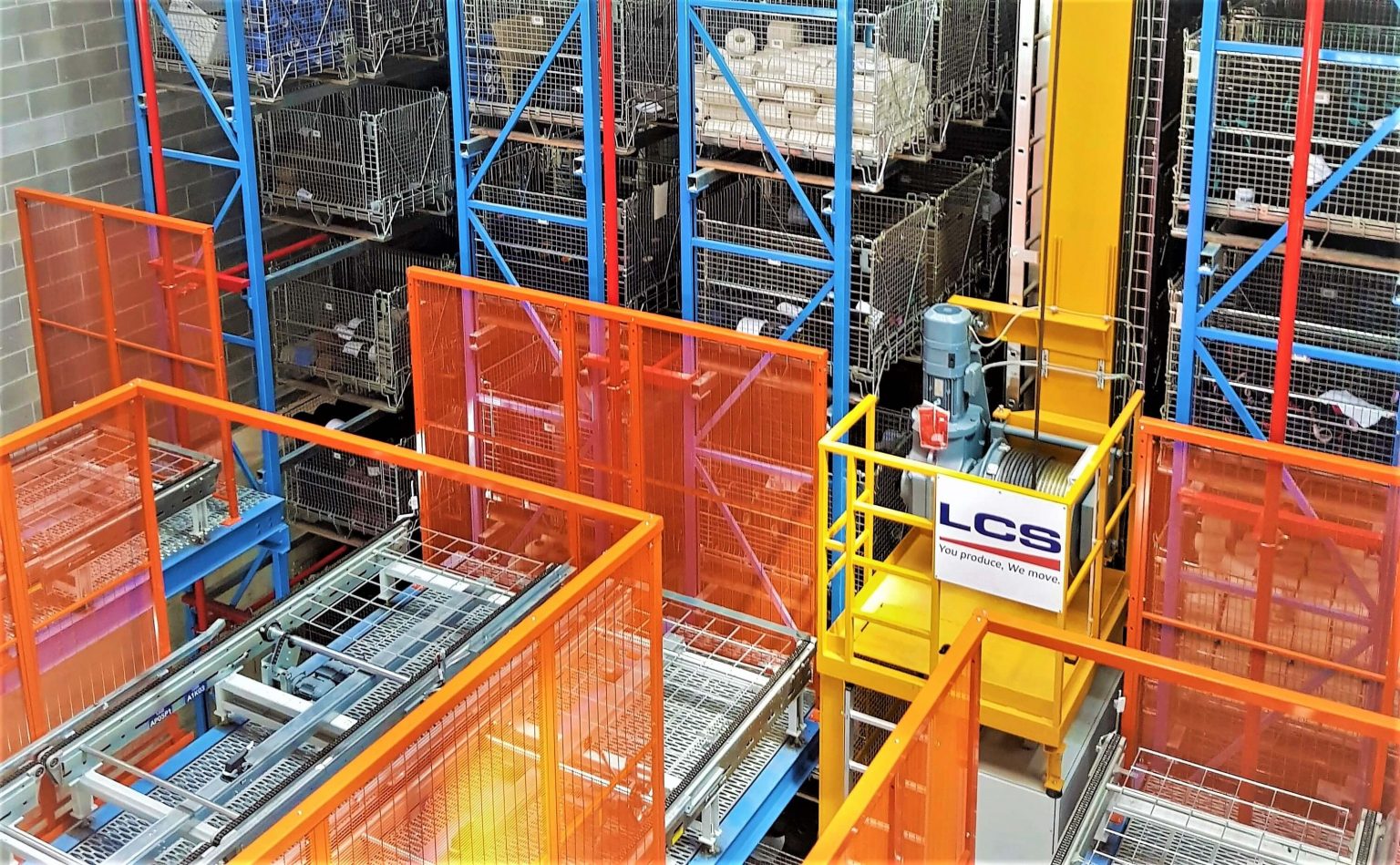
Plant revamping should not be confused with retrofit: the two types of intervention are different from each other, even if nothing prevents them from being integrated.In particular, the revamping corresponds to a mechanical restructuring, while we talk about retrofit when modern electronic control systems and new automatisms are introduced into the machine.
With revamping operations, the productive life of a machine can be extended by 15 years or even more.
Revamping may concern software: therefore, it is not certain that only the hardware is replaced in a PLC. For the revamping of a warehouse management system, for example, the WMS is redesigned, even if the previous warehouse map is kept.
The database, as needed, can be updated or maintained. Improving strategies and functionalities does not necessarily mean changing them; and this does not mean that it is also possible to foresee new ones.
The modernization and updating of existing machines that you can carry out through the revamping of industrial plants may be necessary on several occasions: for example when the maintenance of the software implemented on the SCADA or PLCs is no longer guaranteed, as they have now gone out of production, or when spare parts are no longer available or cost too much.
Another circumstance that should make you think that the time for a revamping has come, is when you realize that scheduled maintenance takes more and more time. The same applies if the frequency of downtime and breakdowns increases, the internal maintenance team can manage with enormous difficulty.
Thus, revamping is presented as a useful solution, also because it is tailor-made for the company. The retrofit is necessary when the intent is not only to restore the performance of the machine, but to benefit from even better performance.
Also in this circumstance the useful life of the old systems is extended, to which new functions or technologies are added.
The Revamping of the plants and technological modernization must be planned carefully and according to a strategic approach, so that the various technological renewal interventions are planned and coordinated each other in an effective way.
It must be assessed whether there is a need to modify existing features or if it is also necessary to add new features. In any case, the upgrade must be carried out so that there is no loss of production.
The procedure to follow for the revamping is not always the same, because it varies according to the needs: for example, in the case of the electrical revamping it is necessary to modify and replace the electrical parts that no longer fit, avoiding modifying the drive software. On the contrary, with the mechanical revamping it is the electrical part that remains unchanged, while the modifications or replacements concern the mechanical parts.
There can also be a supervisor revamping, with the maintenance of the old functions to which new ones are added, in the context of a redesign of the supervision system that leads to its realization from scratch.
Finally, a good revamping of industrial plants cannot be considered as such if compliance with regulations is not ensured, with particular reference to 2006/42 / EC and Legislative Decree no. 81 of 2008, i.e. the Consolidated Law on health and safety at work.


